
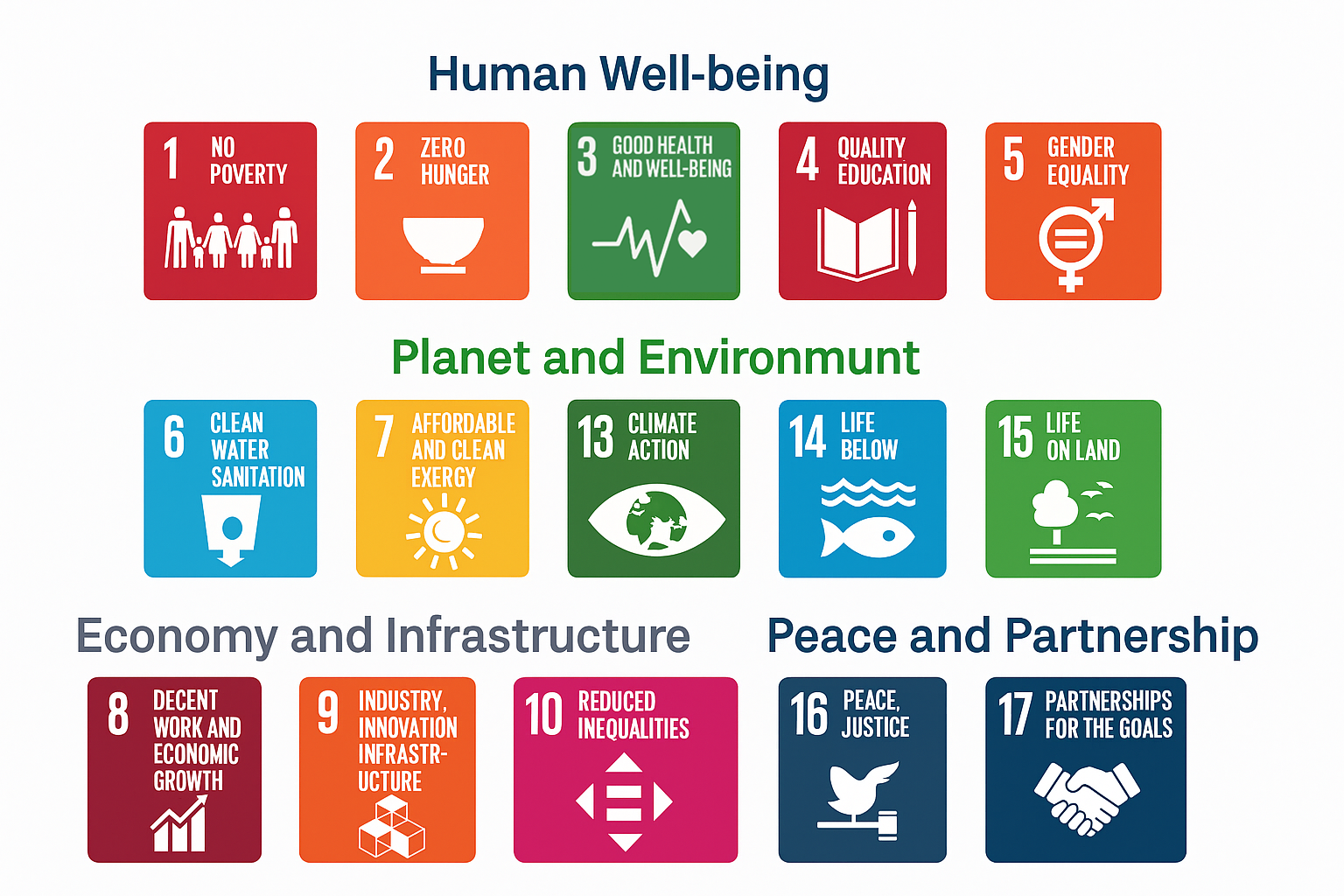
Gayathri Institute of Technology and Management has been actively implementing initiatives aligned with the United Nations Sustainable Development Goals (SDGs) since the academic year 2023–2024, integrating sustainability principles into its academics, research, administration, and community engagement activities. Through inclusive education, skill development programs, innovation-driven learning, environmental responsibility, and social outreach, the institute works to create measurable impact beyond the classroom. Its focus on green practices, interdisciplinary research, student empowerment, and equal access to opportunities reflects a continued commitment to developing socially responsible graduates and contributing to long-term societal and environmental well-being.

- GITM provides scholarships through state and central government schemes to over 950+ students annually.
- Institutional financial aid covers tuition and transportation for economically weaker sections.
- The Career Development Center runs skill-based training programs to uplift socio-economically disadvantaged students.
- Mid-day meals and subsidized food are made available for hostel and day-scholar students from poor backgrounds.
- The college practices food waste minimization through monitored mess operations and awareness programs.
- Student-led initiatives coordinate food donation drives in collaboration with NGOs.
- GITM organizes regular medical check-up camps in collaboration with local hospitals.
- On-campus health center provides basic care and first-aid with visiting doctors on call.
- Physical education programs and wellness workshops are embedded into the campus lifestyle.
- GITM ensures inclusive learning through bridge courses and remedial classes.
- Digital classrooms and LMS platforms are utilized to support blended learning.
- The institution partners with industries to provide internships and certification programs.

- GITM maintains a balanced gender ratio and has a strong anti-harassment cell.
- Women empowerment cell conducts regular workshops on leadership and self-defense.
- Female faculty and student representation is promoted in all committees.
- GITM has implemented rainwater harvesting and efficient water usage systems.
- The campus ensures clean drinking water and hygienic sanitation facilities for all.
- Awareness programs on water conservation are conducted for students and staff.
- Solar panels have been installed on campus buildings for sustainable power.
- Energy audits are conducted periodically to monitor consumption patterns.
- GITM promotes the use of LED lights and energy-efficient appliances.
- The Career Development Center facilitates placements and skill development programs.
- Entrepreneurship cells and incubation support are provided for startups.
- MoUs with companies offer real-time projects and industrial exposure.
- GITM has established research labs, IoT, and AI centers of excellence.
- Technical fests and hackathons are organized to boost innovation.
- Students participate in national-level innovation competitions.
- Scholarships are offered irrespective of caste, creed, or gender.
- Student mentoring and counseling ensure inclusive academic support.
- Programs are conducted to sensitize students on equity and inclusion.
- Campus greenery is maintained with over 2,000 trees and plants.
- GITM collaborates with local bodies on urban development projects.
- Students are encouraged to design sustainable housing and smart city models.
- Waste segregation and recycling units are active on campus.
- Workshops on sustainable practices are included in the curriculum.
- Procurement policies emphasize eco-friendly and reusable materials.
- GITM conducts climate change awareness campaigns and tree plantation drives.
- Environmental Science is mandatory for all students.
- Participation in the International Day for Climate Action is encouraged.
- Students engage in coastal clean-up drives and plastic awareness campaigns.
- Environmental clubs study marine pollution and water ecosystem conservation.
- Projects on microplastic impact and aquatic health are taken up.

- GITM maintains a botanical garden and biodiversity registers on campus.
- Tree-planting initiatives are undertaken regularly by NSS and Eco Club.
- Wildlife protection and biodiversity conservation seminars are organized.

- GITM has transparent grievance redressal mechanisms and student councils.
- Sessions on ethics, human values, and constitutional duties are mandatory.
- Legal awareness and democratic participation programs are held annually.

- GITM actively collaborates with NGOs, industries, and academic institutions.
- Participates in global SDG networks and knowledge exchanges.
- Engages in MoUs with sustainability-focused organizations.
GITM is firmly committed to advancing the vision of the UNDP by aligning its academic and institutional initiatives with the global framework of the SDGs. By embedding sustainability across teaching, research, and community outreach through continuous awareness programs, strategic collaborations, and innovation-driven activities, the institute cultivates socially responsible and environmentally conscious graduates while contributing meaningfully to global sustainable development and inspiring positive societal change.